Resident Resident Zahnarztpraxis
Resident Zahnarztpraxis

Implantology

Lost teeth become Architecture.

An implant does not replace the tooth. It replaces the root. We plan every step in writing, from CBCT scan to crown, working exclusively with Swiss and German implant systems.

Book appointment Frequently asked

Recognized by

  • EMR
  • ASCA
  • Helsana
  • Visana
  • SWICA
  • EGK

Values

How we work.

  • 01

    Swiss Materials

    Straumann and Nobel Biocare. Lifelong availability of every component, certified across Switzerland.

  • 02

    Digital Planning

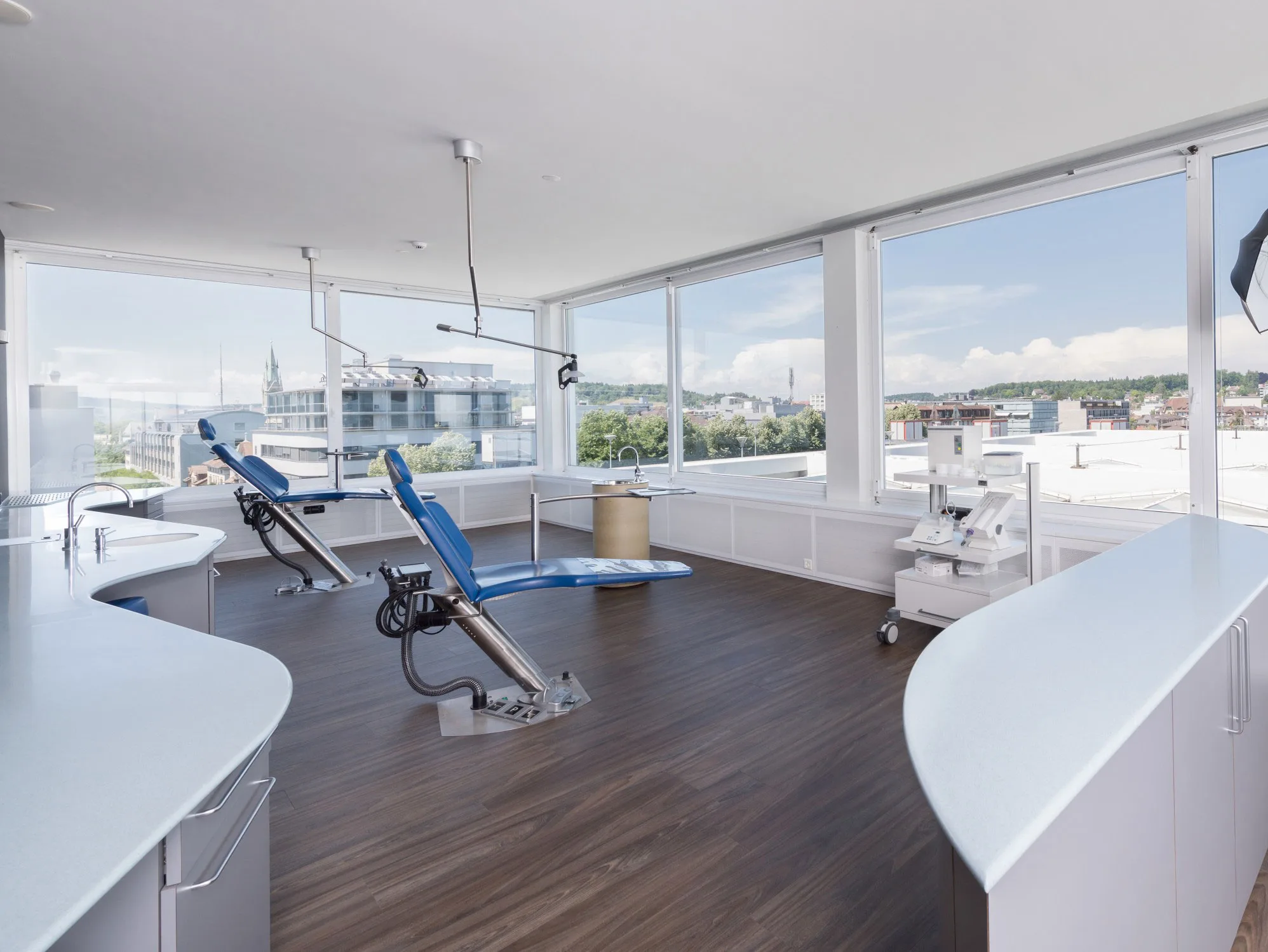
    3D imaging in our own house. Position and axis defined before the first incision, not during it.

  • 03

    One Hand, One Plan

    Surgery and prosthetics with one team. No handovers between practices, no duplicate medical history.

What an implant actually is

A dental implant is a screw made of pure titanium or a titanium-zirconium alloy, anchored as an artificial tooth root in the jawbone. After healing, a crown, bridge or denture is mounted on this implant. Unlike a bridge, neighboring teeth do not need to be ground down. Unlike a removable denture, the replacement sits firmly and transmits chewing forces directly into the jawbone, preventing bone loss.

Why planning matters more than surgery

Most complications in implantology do not arise in the operating room. They arise beforehand, in inadequate diagnostics. An implant in the wrong axis, too close to the nerve canal, in too thin bone, can only be corrected afterwards with significant effort.

We solve this with the three-stage Resident protocol: cone beam computed tomography (CBCT) for three-dimensional representation of bone and nerve course, intraoral scan to capture the mucosal surface and bite position precisely, software-supported planning of the implant position before the first incision. This preparation takes about an hour in our practice and determines the outcome.

Which implant systems we use

We work exclusively with two systems: Straumann (Switzerland) and Nobel Biocare (German-Swedish production). Both have been on the market for more than four decades, clinically documented in thousands of studies, with lifelong availability of every component. This matters if an implant needs to be re-treated prosthetically twenty years from now. With cheaper systems from Asia or Eastern Europe, such follow-up care often cannot be performed because the matching components are no longer manufactured.

Bone augmentation, sinus lift, immediate placement

Not every patient brings the ideal starting situation. Frequently, bone has shrunk after a long-past tooth loss. In these cases we work with augmentation procedures: local bone augmentation with autogenous bone or synthetic bone substitute material, sinus lift in the upper posterior region, membrane techniques for vertical defects. These procedures are now routine and are performed at the same location where the implant is placed.

With intact bone conditions and an existing residual tooth, immediate implantation is an option: in the same session the non-preservable tooth is removed and the implant placed. This significantly shortens overall treatment time and reduces surgical effort.

What matters after surgery

An implant lasts not because of the material but because of care. The mucosa around the implant is structured differently than around a natural tooth and reacts more sensitively to plaque accumulation. We recommend our implant patients two dental hygiene sessions per year and an annual radiographic check of the implant shoulder. Peri-implantitis (the implant variant of periodontitis) is now the most common cause of late implant loss and can be reliably prevented by consistent follow-up care.
How we work

Before the implant comes

the planning.

Resident Zahnarztpraxis

Protocol

01Protocol

Consultation

Thirty-minute first conversation in a quiet setting. We collect findings, clarify medical history and discuss expectations before anything happens in the chair.

02Protocol

3D Planning

CBCT scan and intraoral scan in under twelve minutes. Position, axis and depth of the implant defined in software, not improvised.

03Protocol

Placement

Implant placement under local anesthesia. Healing phase twelve to sixteen weeks. Then definitive crown in zirconia or high-strength ceramic.

Frequently asked

Frequently asked

How long does an implant last?

With proper care and regular dental hygiene, long-term studies show retention rates above 95 percent over twenty years. Prerequisite is healthy mucosa and adherence to annual check-ups.

Does insurance cover the cost?

Basic Swiss health insurance covers implants only in narrowly defined exceptional cases such as accidents. Supplementary dental insurance can cover part of the cost. We provide a detailed written cost estimate before treatment begins, which you can submit to your insurer.

How long does the entire treatment take?

From the first consultation to the definitive crown, typically four to six months. The actual surgery takes about an hour per implant, followed by three to four months of healing and two further sessions for the crown.

What does an implant cost?

Costs depend on position, bone situation, chosen system and any necessary bone augmentation. We bill according to SSO tariff. You receive the written cost estimate after CBCT diagnostics, before treatment begins. You can submit it to your supplementary insurance.

Can anyone receive an implant?

Sufficient bone volume and inflammation-free mucosa are required. With bone deficits we work with augmentation or sinus lift. Severe systemic conditions, bisphosphonate therapy or uncontrolled diabetes need to be clarified beforehand.

Available at

Available at these locations.

Appointment

We look forward to welcoming you.

Book online or by phone at the practice closest to you. We respond within one business day.