Why the first session decides everything else
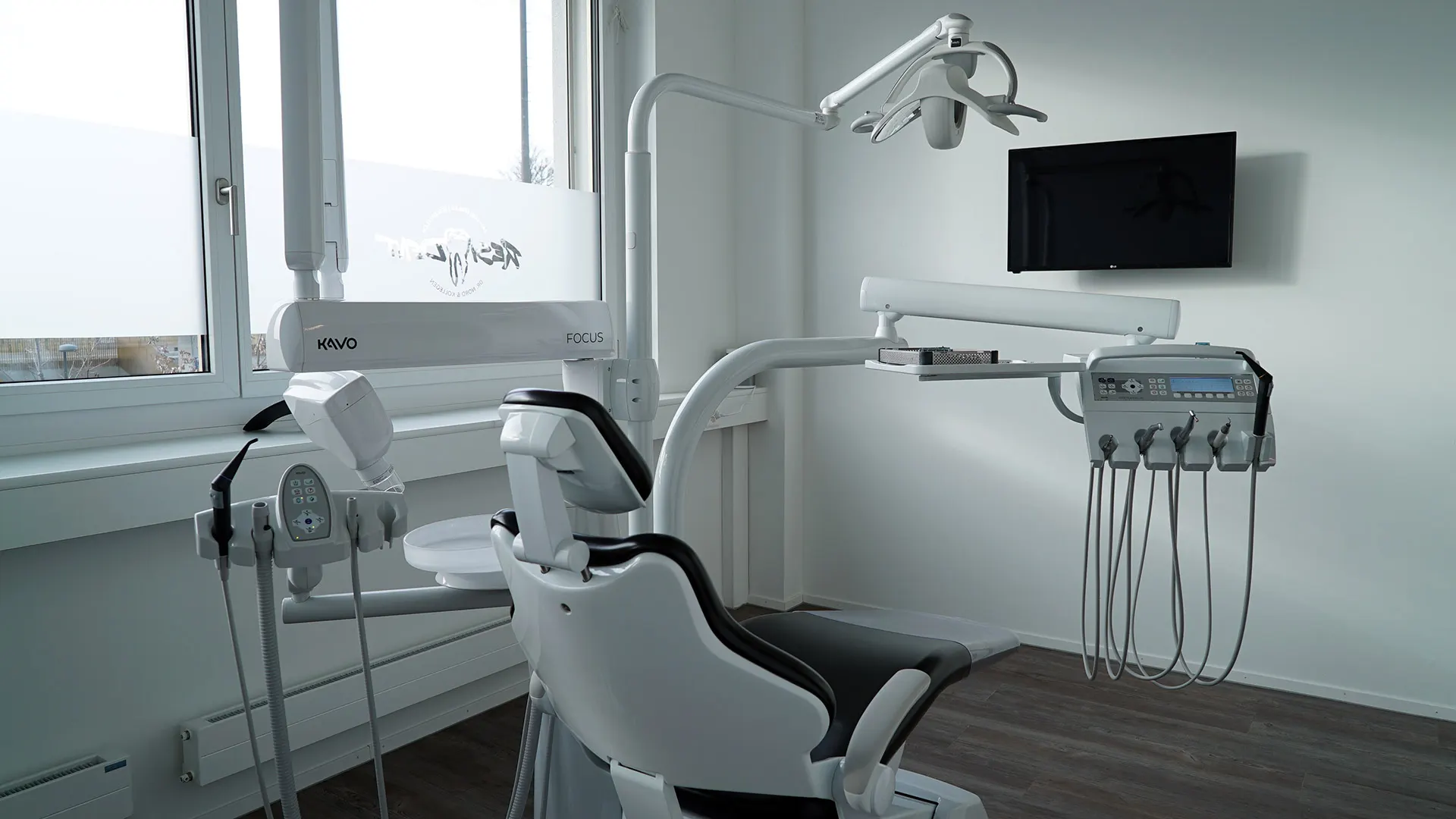
Most adults who suffer from dental anxiety had a bad childhood experience: drill too early, syringe too early, too little explanation. We do it differently. The first session in our practice is a getting-to-know without treatment. The child learns the chair, the instruments, the sounds, the hygienist. They are allowed to try out everything that does not hurt. We discuss what would happen next time and send them home without treatment.
This initial investment pays off over years. A child who knows the practice as a safe place will let themselves be examined at the second appointment, X-rayed at the third, sealed at the fourth. If real treatment becomes necessary, trust is already there. That is children’s dentistry as we understand it.
Prevention instead of repair
The most common cause of children’s caries is long contact of milk teeth with sugared drinks: juice, tea with honey, fruit smoothies, especially via the bottle. We discuss the drink situation in every first conversation with parents and give concrete, practical recommendations, without moral lecturing.
From the sixth year of life, the first permanent molars erupt. These teeth have deep fissures in which plaque accumulates and is hard to remove. With a sealant, a hair-thin plastic layer, these fissures can be closed. Sealing takes about ten minutes per tooth, is painless, lasts five to ten years and significantly reduces caries risk on these teeth.
When treatment becomes necessary
For carious milk teeth we work with local anesthesia. For very anxious children or more extensive treatment, nitrous oxide sedation can be useful, which we offer at our larger locations. In exceptional cases and with medical indication we refer to a pediatric dentist with general anesthesia experience for treatment under full anesthesia.
In treatment we work in short sequences with breaks, explain each step beforehand and stop when the child needs a break. Parents decide together with the child whether they stay in the treatment room or wait in the waiting area.
Early orthodontic treatment
In some children, signs of orthodontic early treatment already show at age six to eight: crossbite, pronounced crowding, early loss of milk teeth with space deficit. In these cases a consultation with the orthodontist is worthwhile, which we coordinate. Early intervention can significantly shorten later more complex treatment or avoid it entirely.